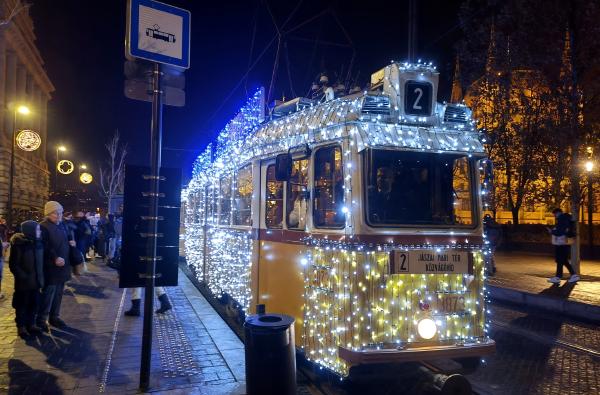
ℹ️ Short answer: Christmas in Budapest is at its best from late November to 23 December, when the markets, light trams, rinks and concerts are all running. Christmas Eve (24 December) shuts the city down by mid-afternoon: shops close by 14:00, Széchenyi closes at 13:00, the Basilica market at 15:00, and transport winds down from around 15:00. On 25–26 December the Basilica market (11:00–20:00) and Széchenyi (10:00–20:00) are open, but most shops and museums aren’t. Plan Christmas Eve around a lunch, a bath and midnight mass. Hungarians do Christmas at home, on the evening of the 24th, which surprises visitors who expect the city to party through it. The weeks before are the opposite: Budapest at Christmas means mulled wine on Vörösmarty tér, trams wrapped in fairy lights, the Nutcracker at the Opera and steam rolling off Széchenyi’s pools into the dark at 16:00.
ℹ️ Short answer: The best time to visit Budapest is May or September. Both average highs of about 22.5 °C, the days are long, and everything seasonal is running. For the lowest prices and emptiest sights, go in January or February: Budapest’s hotels and guesthouses logged about 690,000 guest nights in each in 2025, against 1.17 million in August. Avoid August and the second half of December unless you’re coming for Sziget, St Stephen’s Day or the Christmas markets. The best time to visit Budapest is not when most blogs say it is. In 2025, October and December were both busier than July, so the “quiet shoulder season” is mostly a myth: Budapest is busy most of the year and properly quiet for two months. Below, every month is judged on HungaroMet’s official climate normals and the statistics office’s (KSH) guest figures, not guesswork.
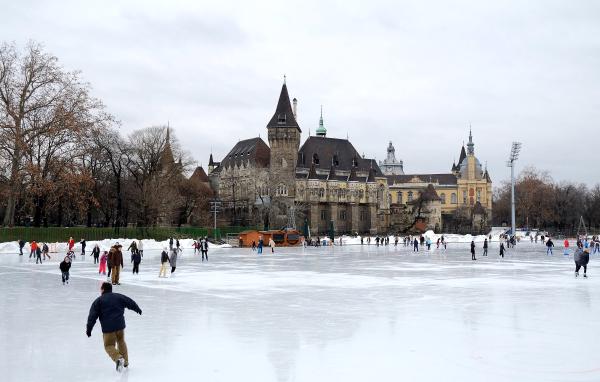
ℹ️ Short answer: Yes, Budapest is worth visiting in winter, if you like hot water and cold air. Széchenyi’s outdoor pool stays at 36–38 °C, the Christmas markets opened on 14 November in 2025 (the Basilica market’s 2026 dates are announced: 13 November), and hotel rates in early 2026 ran about 19% below the 2025 average. The catch: January averages 3 °C by day and −2.5 °C at night, and the sun sets around 16:00 in December. Budapest in winter is cold, grey and dark by four o’clock. It’s also the season the city does best: steaming outdoor baths, mulled wine in the squares, an ice rink in front of a castle, and cafés built for sitting out a cold afternoon. This guide covers the real temperatures and daylight hours, what’s open around Christmas and New Year, what closes, and whether a winter trip is worth it for you.
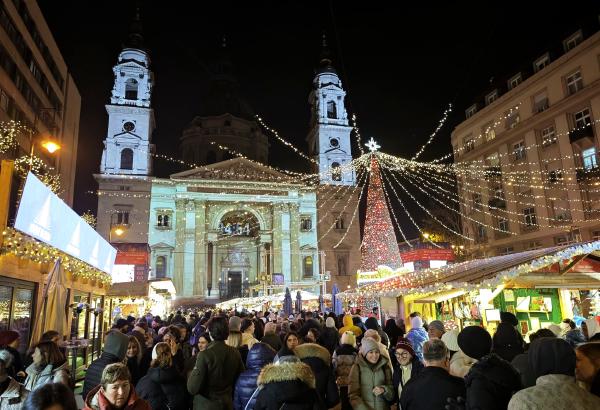
ℹ️ Short answer: As of October 2026, the Basilica market has announced 13 November 2026 to 1 January 2027, while the Vörösmarty tér dates are still unannounced. In 2025 both main markets opened on 14 November, and ran until 31 December (Vörösmarty tér) and 1 January (Basilica). The Advent Feast at St Stephen’s Basilica is the one to prioritise, for its nightly light show. Mulled wine cost about 1,500 HUF (about €4) a cup in 2025. Go on a weekday evening, after 17:30. The Budapest Christmas markets are smaller than the ones in Vienna or Nuremberg, and that’s their charm. Two main squares, ten minutes apart, with better food than they need to have and a light show projected onto a basilica. The tricky part in 2026 is the calendar. The main market is changing hands, and most guides are quietly recycling last year’s dates.