Plan your Budapest trip without the guesswork. These practical guides cover getting in from the airport, using the trams and metro, money and tipping, daily costs, scams to avoid and the best time of year to go.
ℹ️ Short answer: The Budapest Card is worth it only if you visit museums. The 72-hour card costs 29,990 HUF (about €82) against 5,750 HUF (about €16) for a 72-hour travelcard, so its free entries must be worth about 24,000 HUF before you save anything. A classic first trip (Parliament, Széchenyi, a cruise) falls short by about 6,500 HUF, because the Parliament isn’t included and Széchenyi is only 20% off. Add three or four museums, or Lukács Bath, and the card saves 10,000 HUF or more. The Budapest Card is the city’s official sightseeing pass, sold by the transport company BKK. Its price went up on 1 May 2026, and most of the pages ranking for “is the Budapest Card worth it” still quote older prices, a 120-hour card that no longer exists, or a free Matthias Church visit that isn’t on the official list. This guide uses BKK’s current price list and partner list, and runs the maths for three real trips.
ℹ️ Short answer: Two days is enough for Budapest’s headline sights if you give each day one side of the river. Day 1 is Pest: the Basilica, the Parliament, the Jewish Quarter and Széchenyi Baths. Day 2 is Buda: the Great Market Hall, Gellért Hill, Castle Hill at sunset and a river cruise. Book the Parliament tour weeks ahead, buy a 72-hour travelcard (5,750 HUF) rather than the Budapest Card, and budget about 60,000–70,000 HUF (€165–190) for sights and transport. Two days in Budapest is enough, but only if you stop crossing the river. The mistake most 48-hour plans make is zig-zagging between Buda and Pest twice a day, which costs you an hour you don’t have. This itinerary gives each day one side, uses walking times from BKK’s own journey planner, and tells you where weekends and Mondays will trip you up.
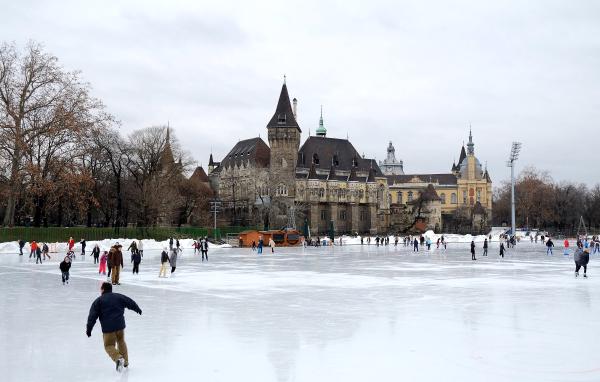
ℹ️ Short answer: Yes, Budapest is worth visiting in winter, if you like hot water and cold air. Széchenyi’s outdoor pool stays at 36–38 °C, the Christmas markets opened on 14 November in 2025 (the Basilica market’s 2026 dates are announced: 13 November), and hotel rates in early 2026 ran about 19% below the 2025 average. The catch: January averages 3 °C by day and −2.5 °C at night, and the sun sets around 16:00 in December. Budapest in winter is cold, grey and dark by four o’clock. It’s also the season the city does best: steaming outdoor baths, mulled wine in the squares, an ice rink in front of a castle, and cafés built for sitting out a cold afternoon. This guide covers the real temperatures and daylight hours, what’s open around Christmas and New Year, what closes, and whether a winter trip is worth it for you.
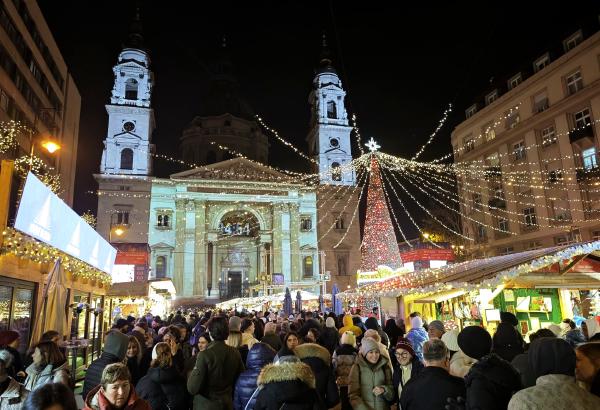
ℹ️ Short answer: As of October 2026, the Basilica market has announced 13 November 2026 to 1 January 2027, while the Vörösmarty tér dates are still unannounced. In 2025 both main markets opened on 14 November, and ran until 31 December (Vörösmarty tér) and 1 January (Basilica). The Advent Feast at St Stephen’s Basilica is the one to prioritise, for its nightly light show. Mulled wine cost about 1,500 HUF (about €4) a cup in 2025. Go on a weekday evening, after 17:30. The Budapest Christmas markets are smaller than the ones in Vienna or Nuremberg, and that’s their charm. Two main squares, ten minutes apart, with better food than they need to have and a light show projected onto a basilica. The tricky part in 2026 is the calendar. The main market is changing hands, and most guides are quietly recycling last year’s dates.
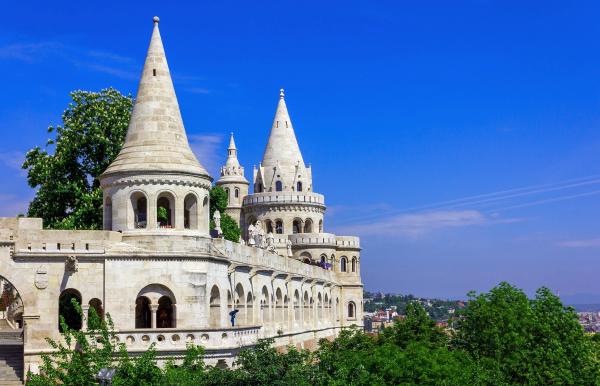
ℹ️ Short answer: Three days is the right amount of time for a first visit to Budapest. Spend Day 1 in Pest (Basilica, Parliament, Andrássy út, Széchenyi Baths), Day 2 in Buda (Castle Hill, Fisherman’s Bastion, the Citadella at sunset) and Day 3 in the Jewish Quarter (Dohány Synagogue, Great Market Hall, an evening cruise). Book the Parliament tour weeks ahead, buy a 72-hour travelcard (5,750 HUF), and avoid putting the synagogue on a Saturday. With 3 days in Budapest you can see the city properly and still have time to sit in a café doing nothing, which is a large part of the point. The catch is timing. Parliament tickets sell out weeks ahead, the synagogue shuts on Saturdays, the market hall keeps short Sunday hours, and half the museums take Mondays off. A good plan fits around all of that.